
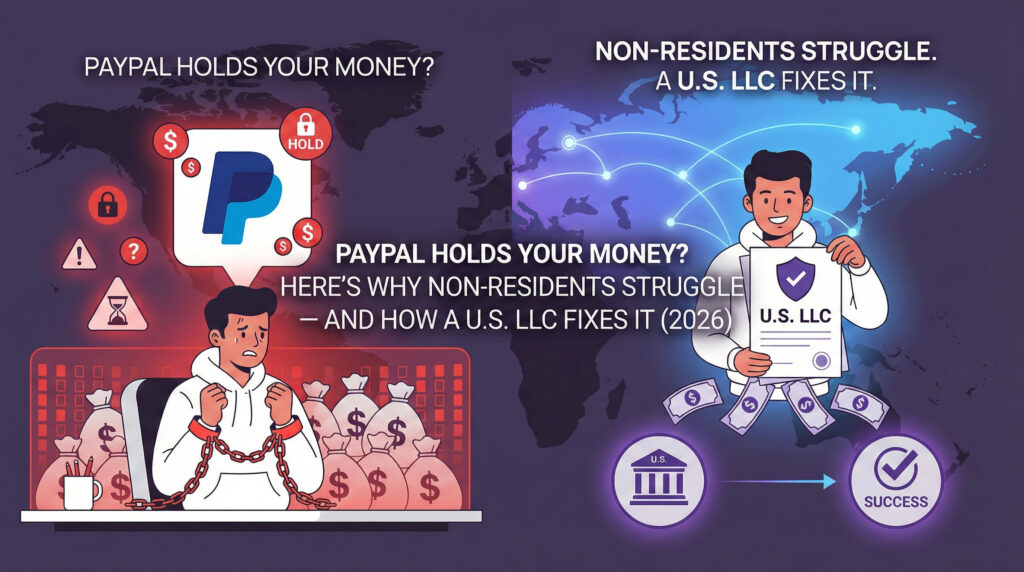
PayPal is one of the most trusted payment platforms in the world — yet for non-resident entrepreneurs, it is also one of the most frustrating. Account limitations, sudden fund holds, and long review periods are common problems that prevent global founders from scaling their businesses.
If PayPal has ever held your money or restricted your account, the issue is rarely personal. In most cases, it comes down to risk, compliance, and business structure.
In this guide, we explain why PayPal struggles with non-resident accounts and how forming a U.S. LLC can dramatically improve payment stability in 2026.
Why PayPal Holds Money for Non-Residents
PayPal operates under strict international financial regulations. Its systems are designed to minimize fraud, chargebacks, and legal exposure.
For non-residents, PayPal often sees higher risk due to:
Cross-border transactions
Jurisdictional complexity
Difficulty verifying business identity
Inconsistent documentation
As a result, PayPal may place temporary or permanent holds on funds until additional verification is completed.
Common Reasons PayPal Limits Accounts
In 2026, PayPal’s automated systems are more advanced than ever. The most common triggers include:
Rapid increase in sales volume
Mismatch between country, IP address, and account details
Operating as an individual instead of a company
Selling digital services or subscriptions without a clear business profile
Missing or unclear legal documentation
Even legitimate businesses can be affected if their setup looks unstable.
Personal PayPal Accounts vs Business Accounts
Many non-resident founders start with a personal PayPal account. While this may work initially, it becomes a problem as soon as the business grows.
Key differences:
Personal accounts are designed for casual use
Business accounts are built for commercial activity
Business accounts support higher volume and better compliance
Running a business through a personal account is one of the fastest ways to trigger limitations.
How a U.S. LLC Fixes the Problem
A U.S. Limited Liability Company (LLC) aligns perfectly with PayPal’s compliance model.
1. Clear Legal Identity
A U.S. LLC provides PayPal with:
A registered company
A verifiable legal structure
Clear ownership information
This reduces uncertainty and improves trust.
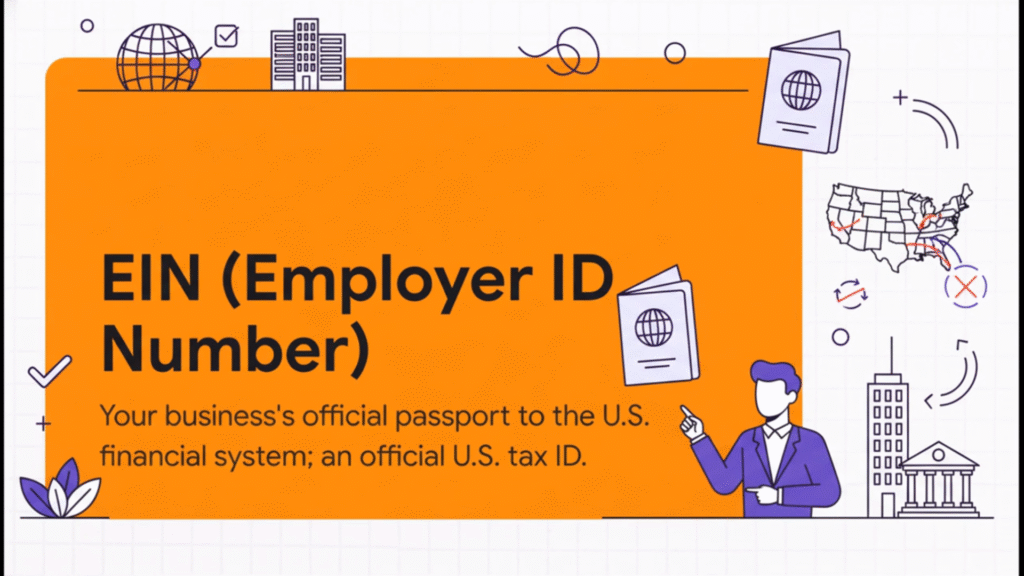
2. EIN (Employer Identification Number)
An EIN acts as a tax ID for your business. PayPal uses it to:
Verify legitimacy
Confirm business classification
Reduce fraud risk
Non-residents can obtain an EIN without a U.S. Social Security Number.
3. U.S. Business Bank Account
When PayPal is connected to a U.S. business bank account:
Transaction flows are clearer
Risk scoring improves
Reviews and holds are reduced
Banks like Mercury and Relay are commonly used by non-resident LLC owners.
4. Stronger Compliance Profile
With a U.S. LLC, PayPal sees:
Consistent documentation
A stable jurisdiction
A long-term business presence
This significantly lowers the chance of sudden fund holds.
Is a U.S. LLC Legal for Non-Residents?
Yes. Non-U.S. residents can legally:
Own 100% of a U.S. LLC
Obtain an EIN
Open a U.S. business bank account
Use PayPal and other payment gateways
In many cases, non-residents do not owe U.S. federal income tax if the business has no U.S. effectively connected income — though professional guidance is always recommended.
Best Practices to Keep Your PayPal Account Safe in 2026
Even with a U.S. LLC, good practices matter:
Keep growth gradual
Match website content with PayPal activity
Avoid misleading product descriptions
Respond quickly to verification requests
Maintain low dispute and chargeback rates
PayPal rewards predictability and transparency.
PayPal does not target non-residents — it targets risk.
For global entrepreneurs, the safest way to avoid account limitations and fund holds in 2026 is to operate with a proper legal and financial structure.
A U.S. LLC is not just a formality.
It is the foundation that turns PayPal from a risk into a reliable growth tool.